AI for Science 的数据困境
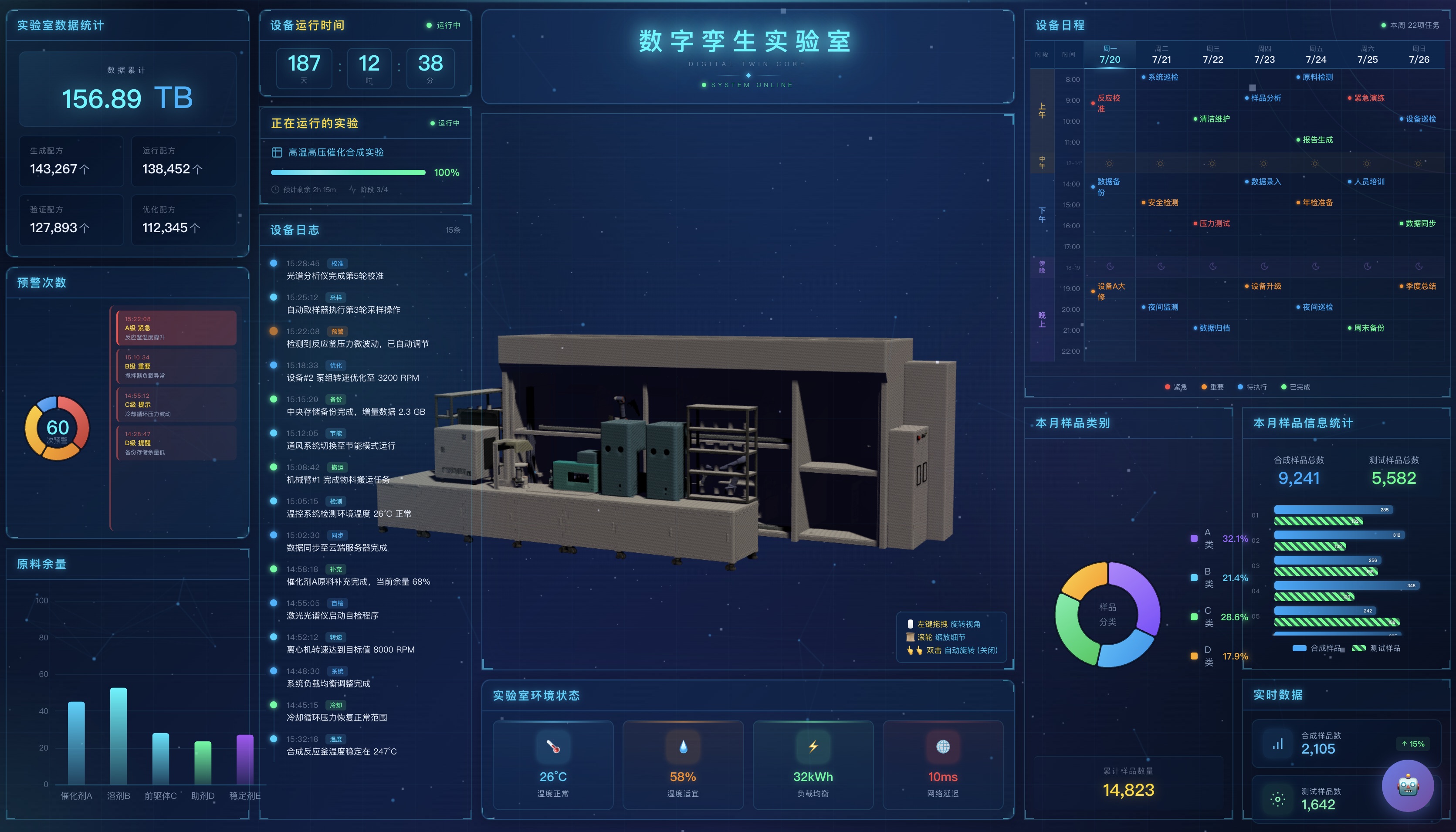
近年来,AlphaFold、GNoME 等 AI 驱动的科学发现引发广泛关注,但在大多数实验室,AI 模型的训练与推理仍然面临一个根本瓶颈:缺乏足量、结构化、可复现的实验数据。
现有实验数据往往分散在纸质记录、孤立仪器导出文件和研究人员的个人电脑中,格式不统一、元数据缺失,难以直接用于模型训练或闭环优化。即使研究人员意识到数据积累的重要性,手动记录的效率与一致性也难以支撑大规模数据生产需求。
实验自动化闭环的四个环节
基于模型预测,生成实验配方与参数方案
自动化平台按配方无人完成实验操作
带时间戳的结构化实验数据自动写入数据库
模型以新数据更新,生成下一轮实验假设
自动化平台如何为 AI 供给可信数据?
统一数据格式与元数据
自动化系统为每次实验操作打上完整元数据标签,包括操作人员、设备编号、批次号、时间戳与实验参数,形成可直接检索的结构化记录,无需人工整理即可导入模型训练流程。
高采样率、低噪声的过程数据
真泰科技的自研数据采集卡(16bit · 200kS/s)实现检测级精度的过程数据采集,为需要精细时间序列数据的模型(如反应动力学预测)提供充足的信息密度。
可复现实验的标准化底座
可编程配方引擎确保每次实验按相同参数执行,消除人工操作引入的随机变量,使"可复现性"从原则落实为系统保障。当模型需要验证某一假设时,自动化平台能够按需重复执行标准实验,不依赖操作人员的经验与状态。
开放接口设计:真泰科技的自动化平台兼容 MCP / SiLA 2 编排协议与 OPC UA / Modbus 双向通讯,预留 SDK 接口,为 AI 决策系统的调度指令与数据回流提供标准入口。
从数据基础设施出发
AI for Science 的落地不是一蹴而就的算法突破,而是从数据基础设施开始的系统性建设。自动化平台是这一基础设施的核心入口:它把实验室从"产生数据的地方"转变为"产生可信、可用数据的工厂"。
The data bottleneck in AI for Science
Recent advances like AlphaFold and GNoME have demonstrated the potential of AI-driven scientific discovery, yet most labs still face a fundamental bottleneck: a shortage of large-scale, structured, reproducible experimental data.
Existing experimental data is scattered across paper records, isolated instrument export files and researchers' personal computers — non-uniform in format, lacking metadata, and difficult to use directly for model training or closed-loop optimization.
The four stages of an automated experimental loop
Generate experiment recipes and parameters from model predictions
Automation platform runs experiments unattended per recipe
Timestamped structured data written automatically to the database
Model updates with new data and generates the next round of hypotheses
How does the automation platform supply trustworthy data to AI?
Unified format and metadata
The automation system tags every experimental operation with complete metadata — operator, equipment ID, batch number, timestamp and parameters — forming searchable structured records that can feed directly into model training pipelines without manual preparation.
High-rate, low-noise process data
Zhentai's in-house DAQ card (16-bit · 200 kS/s) delivers inspection-grade process data, providing the information density needed by models that depend on fine-grained time series (e.g. reaction kinetics prediction).
Reproducibility as a system guarantee
A programmable recipe engine ensures every experiment runs with identical parameters, eliminating the random variables introduced by manual operation. When a model needs to validate a hypothesis, the platform can re-run the standard experiment on demand, independent of operator skill or state.
Open interface design: Zhentai's platform is compatible with MCP / SiLA 2 orchestration protocols and OPC UA / Modbus bidirectional communication, with an SDK reserved for AI decision system dispatch commands and data return.
Start from the data infrastructure
AI for Science does not land through a single algorithmic breakthrough — it begins with building a data infrastructure. The automation platform is the core entry point: it transforms the lab from "a place that generates data" to "a factory that produces trustworthy, usable data."
希望为 AI 研究铺好数据底座?Want to build the data foundation for AI research?
告诉我们您的工艺流程与设备清单,我们评估自动化方案。Share your process and equipment list — we will scope an automation solution.